“Keep it simple, stupid!” lacking political correctness, but wise words nonetheless.
There is a problem-solving principle in philosophy called Occam’s Razor: the simplest solution tends to be the right one. When applied to the pursuit of health, much confusion can be avoided.
Do you see food as a problem? Does it involve endless strategy, the need for it to be arranged and segregated, formulated, calculated, tabulated, broken down into its constituent parts, then deciphered, before finally being eaten?
This isn’t an argument for mindless eating, far from it. It’s a kindly warning against over-mindfulness: being so mindful that you start to exhibit signs of orthorexia – a condition where an individual is driven to eat in a way they see as perfect or pure, involving inflexible eating behaviour.
Let’s say, you’re within the 80% (yes, you read that right – 80%) of people who are dissatisfied with their level of body fat, and are determined to improve your appearance. How do you become more mindful without problematizing food?
In the spirit of Occam’s Razor, here are five simple strategies, three involving food, which
you can initiate immediately to:
- Increase your physical attractiveness and confidence (by reducing your body fat and adding lean muscle).
- Slow down the ageing process (by improving your energy, strength, bone density, balance, coordination, flexibility, and cardiovascular health).
- Increase life expectancy and quality of life (by reducing your inflammation).
They are:
- Eliminate foods that are of a high glycaemic load.
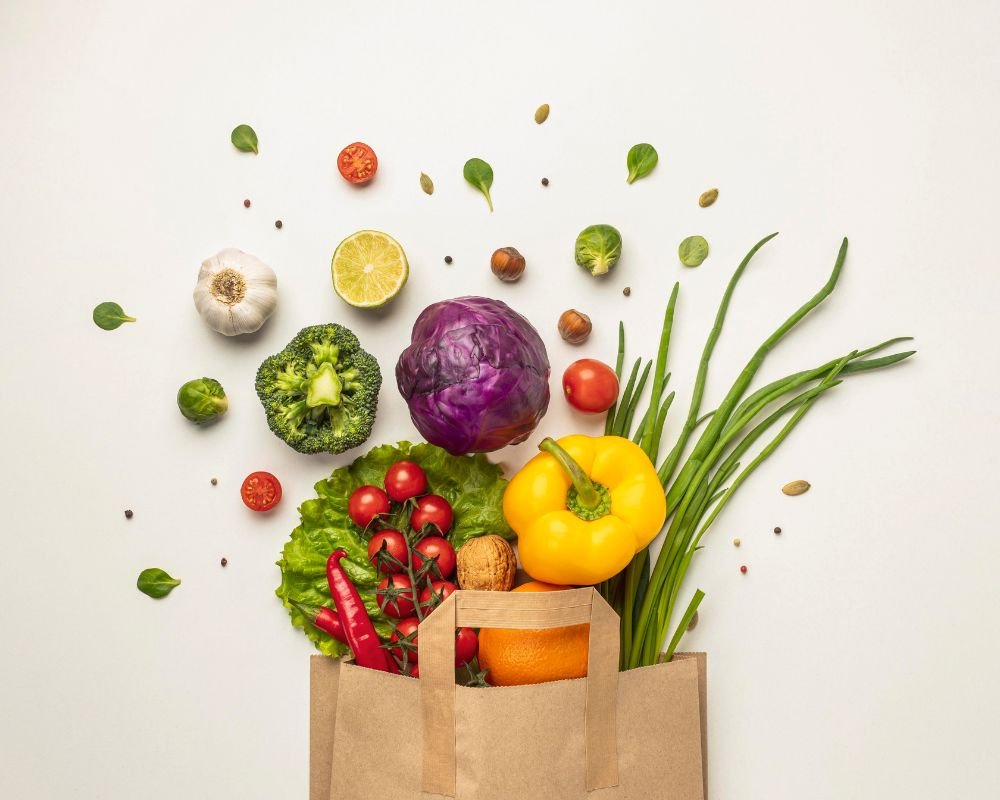
- Eat real food (as distinct from ‘edible food-like substances’).
- Don’t overeat.
- Walk a lot.
- Lift heavy things.
Let’s flesh out each of these strategies.
1. Eliminate Foods of the High Glycaemic Load

This is the first level of approximation for fat loss.
Sugar and bread products are the big culprits here. Carbohydrate-containing foods can be rated on a scale called the glycaemic index (GI). This scale ranks carbohydrate-containing foods based on their effect on blood sugar levels over a period of time.
High GI foods spike your blood sugar sharply and quickly. High blood sugar is toxic to your system, so the body has a defence mechanism that effectively lowers it: insulin. But where does insulin deposit the vast majority of this blood sugar? Adipose tissue (body fat).
Renowned researcher and author Gary Taubes elaborates “The idea is that sugar is composed of two simple carbs: glucose and fructose, bonded together. The glucose raises blood sugar and stimulates insulin secretion. The fructose is metabolized in the liver and the combination, when consumed in high doses, is the likely cause of a condition called insulin resistance. Once you’re insulin resistant—metabolically disturbed—you’re secreting more insulin to handle the carbohydrates you’re consuming, and you’re gaining fat, heading toward becoming diabetic. The question then is what do you have to do to solve that problem? For most people, just removing the sugar is not enough. You need to remove all the easily digestible carbs, which means pretty much all those except the carbs in green vegetables”
Yes, there are genetic outliers who can eat sugar, potatoes, and bread and remain lean and healthy, but for the vast majority, such foods simply make us fat. Taubes continues, “.…if I was going to point out the one thing anyone could do to improve their diet, it would be get rid of the sugar. And the second would be to get rid of the refined grains.” Both of which are very high GI.
Again, there are genetic variances between individuals, but the first step is to cast a wide net by removing such foods for a period of time, then assess the results and your individual sensitivity. Having experienced professional guidance during this initial stage is a virtual guarantee of success.
2. Eat Real Food

As Michael Pollan says, “if it doesn’t rot, don’t eat it”. A good rule of thumb. I would add an additional maxim – ‘be suspicious of barcodes’. If an edible product comes in a jar, can, tin or box, a scrupulous eye needs to be cast over the label. What are they up to? Usually, a lot of sugar, toxic industrially made oils, preservatives and flavour enhancers of all manner are surreptitiously added. This isn’t food, it’s a product carefully designed to trick your biology into liking it.
In a deeply disturbing but important book – The Dorito Effect – journalist Mark Schatzker shows how unscrupulous food chemists working for the profit of big business have interfered with a highly sophisticated chemical language that evolved to guide our nutrition, making us yearn for “food” that is damaging to us.
“The food problem”, Mark explains, “is a flavour problem. For half a century, we’ve been making the stuff people should eat – fruits, vegetables, unprocessed meats – incrementally less delicious. Meanwhile, we’ve been making the food people shouldn’t eat – chips, fast food, soft drinks, crackers – taste even more exciting. The result is exactly what you’d expect.”
Please review my article ‘The Importance of Cooking’. The better you are in the kitchen, the more likely you are to eat real food.
3. Don’t Overeat
This is the second level of approximation for fat loss.
Please review my articles on the social psychology of overeating and intermittent fasting. In brief, never feel obliged to eat if you’re not hungry. When you have achieved blood sugar stability – i.e. you have removed high GI foods from your diet – you’ll be able to trust your hunger as an accurate indication of the need for food, allowing you to become more intuitive about food quantity without the need for calorie counting.
Fluctuating blood sugar levels lead to mid-morning and mid-afternoon cravings for snacks – usually of the sugar (chocolate), refined grains (crackers, bread), or starch (chips) variety – which, in turn, perpetuate this vicious cycle.
Contrary to overexcited public opinion, breakfast is not “the most important meal of the day”, although it may seem like it for those in a blood sugar trough. If you feel like it, enjoy breakfast; if not, skip it with a clear conscience. And while we’re on the subject, breakfast cereal is dessert and should have no place in any thinking person’s diet. It is a testament to brilliant marketing that millions have been convinced that such artificial, toxic junk food is healthy.
4. Walk a Lot

A little is good, but more is better. The simple act of walking is one of the most underrated activities you could do. It costs nothing, and provides innumerable benefits, from increased heart and lung health, reduced risk of heart disease (Australia’s biggest killer), and improved management of conditions such as high blood pressure, joint and muscular stiffness, to stronger bones, improved balance, reduced body fat and the mitigation of depression. Plus, you’re in Australia; this place is beautiful – enjoy it for its own sake.
5. Lift Heavy Things
Human beings, from time immemorial, have always walked a lot and lifted things. We’re hard-wired to do this. Of course, manual labour of the type our early ancestors were obliged to do is not possible, desirable, or even safe, for most of us. This is where fitness facilities with welcoming supportive cultures are indispensable.
In a controlled and safe setting, with an experienced, qualified professional to guide you, the degeneration associated with ageing is mitigated enormously. Increased muscle tone, greater strength, stronger bones, improved balance and coordination, and increased metabolism are just some of the payoffs associated with resistance training.
If you’re in need of assistance and have been putting off starting because it all seems just too difficult, contact Jaymes at the north Sydney based gym embody .
“A journey of a thousand miles begins with a single step” Lao Tzu
James Gleeson is a Personal Trainer at Tribe Social Fitness, Sutherland Shire, Sydney.